The data center power crisis is the new GPU shortage
5 min
In 2023, the question every AI team asked their infrastructure provider was: "Can you get me H100s?" In 2026, it is a different question: "Can you actually power them?" The bottleneck on AI capacity has migrated, and most procurement conversations have not caught up.
The numbers that broke the grid
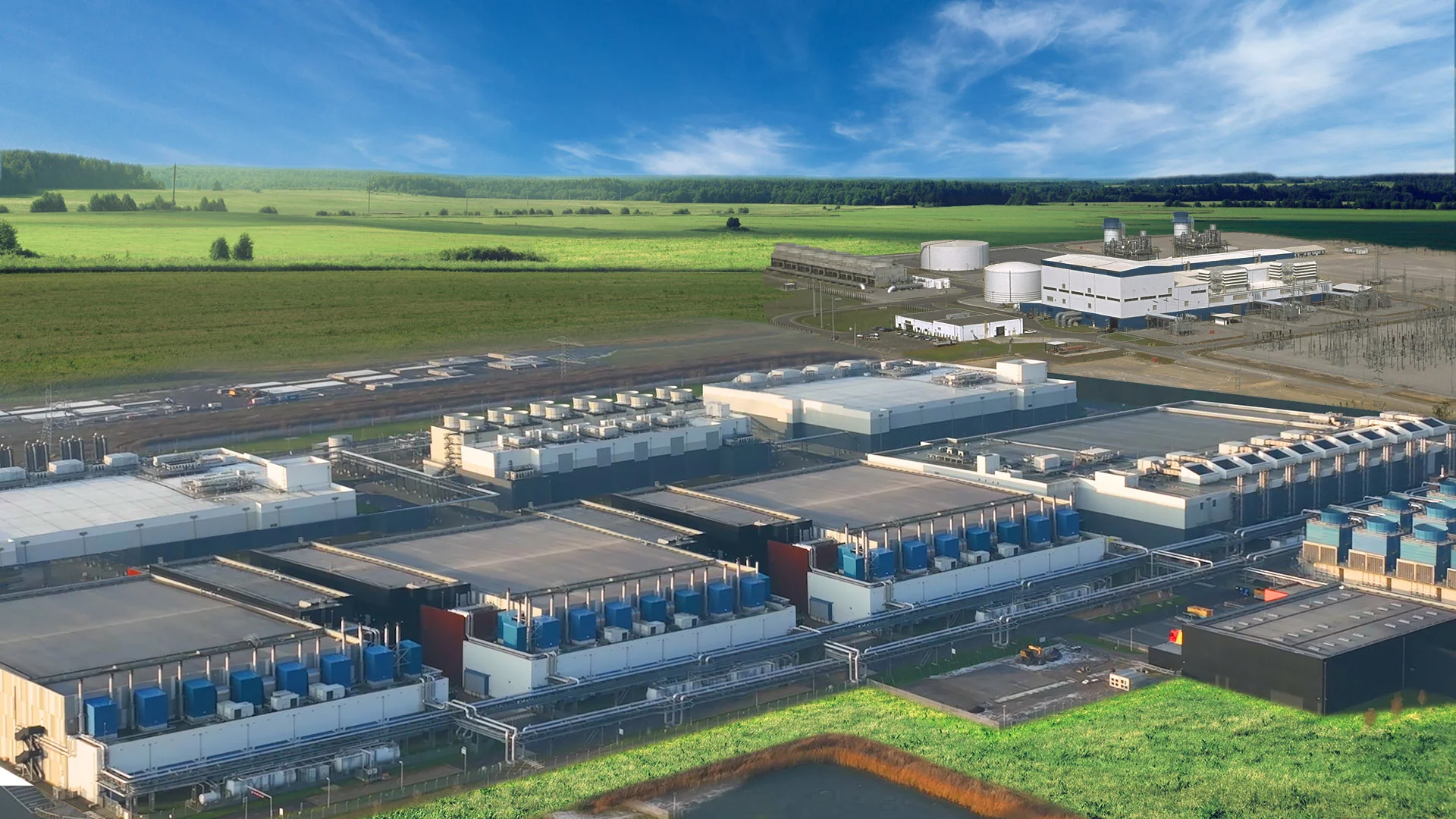
Global data center electricity demand is projected to exceed 1,000 TWh in 2026, roughly double the 2023 baseline. If data centers were a country, they would rank as the world's fifth-largest electricity consumer, sitting between Japan and Russia. AI-associated load alone is on track to hit 10 GW by year-end.
Local grids were not sized for this. In several US markets, interconnection queues for new high-load customers stretch into 2028. Heavy electrical equipment like large transformers and switchgear has multi-year lead times. The Netherlands implemented a nine-month moratorium on new hyperscale permits while regulators assessed grid impact. Analysts now project that 40% of AI data centers will be power-constrained by 2027.
"Available" doesn't mean what it used to
When a cloud provider lists GPU capacity as available, the implicit assumption used to be that rack space exists, GPUs are racked, and you can deploy. That assumption is increasingly breaking down. Today, "available" often means that capacity is on order, contingent on a substation upgrade, and contingent on a utility interconnection that has not been approved.
For teams committing to long training roadmaps, the gap between announced capacity and powered capacity is the new risk. A 12-month training plan built on infrastructure that will not have full power until month 8 is not really a plan so much as a hope.
Why neoclouds moved first
The neoclouds that secured power early are the ones still scaling. Crusoe built its earliest sites adjacent to stranded natural gas that would otherwise be flared. CoreWeave pre-negotiated long-term power purchase agreements before the hyperscalers re-entered the bidding. Several European operators sited capacity in Nordic regions specifically for hydroelectric access.
This is as much a procurement story as an environmental one. Power is now the constraint that determines whether a GPU cluster ships in Q3 2026 or Q1 2028. The neoclouds that treated electrical infrastructure as a first-class input, rather than a downstream concern, are the ones with capacity to sell today.
Three questions that cut through the marketing
First, what is your contracted power capacity at the facility hosting this cluster, in megawatts? Second, when was that capacity energized by the utility, in the past tense? Third, what is the substation redundancy plan if the primary feed is interrupted? Providers operating at scale will answer all three quickly, while providers selling capacity that is not yet powered will deflect.
The next constraint after power
Once power is locked in, cooling becomes the next bottleneck. Modern GPU racks pull 80 to 120 kW per rack, well past the limits of air cooling. Direct-to-chip liquid cooling and immersion cooling are no longer differentiators but table stakes. Facilities still relying on air cooling will be capped at densities that make next-generation GPUs uneconomical to operate.
Where Aolani Cloud fits
Aolani Cloud sites capacity in regions with secured, long-term power agreements and modern thermal infrastructure built for high-density GPU clusters. When we tell a customer their capacity is available, we mean it is racked, powered, cooled, and ready. That is a meaningfully different commitment than capacity contingent on a grid interconnection three quarters out.
Scale AI Infrastructure from Chip to Cluster
Access GPU cloud and bare metal compute designed for teams building the next generation of AI in the region.