The neocloud era: why AI workloads are leaving the hyperscalers
5 min
For two decades, "cloud" meant the same three companies. AWS, Azure, and Google Cloud built their businesses on a simple promise: any workload, any region, on demand. For most enterprise computing, that promise held up. For AI training and inference at modern scale, it has quietly cracked.
A new category, almost overnight
The neocloud category, meaning GPU-first cloud providers built specifically for AI workloads, barely existed three years ago. Today it is a $35 billion market on a trajectory toward $236 billion by 2031. CoreWeave alone holds a backlog north of $66 billion and is guiding to between $12 and $13 billion in 2026 revenue. Nebius grew its AI revenue 841% year-over-year in its most recent quarter. Lambda, Crusoe, Nscale, Vultr, and a long tail of regional specialists are all racing to deploy capacity.
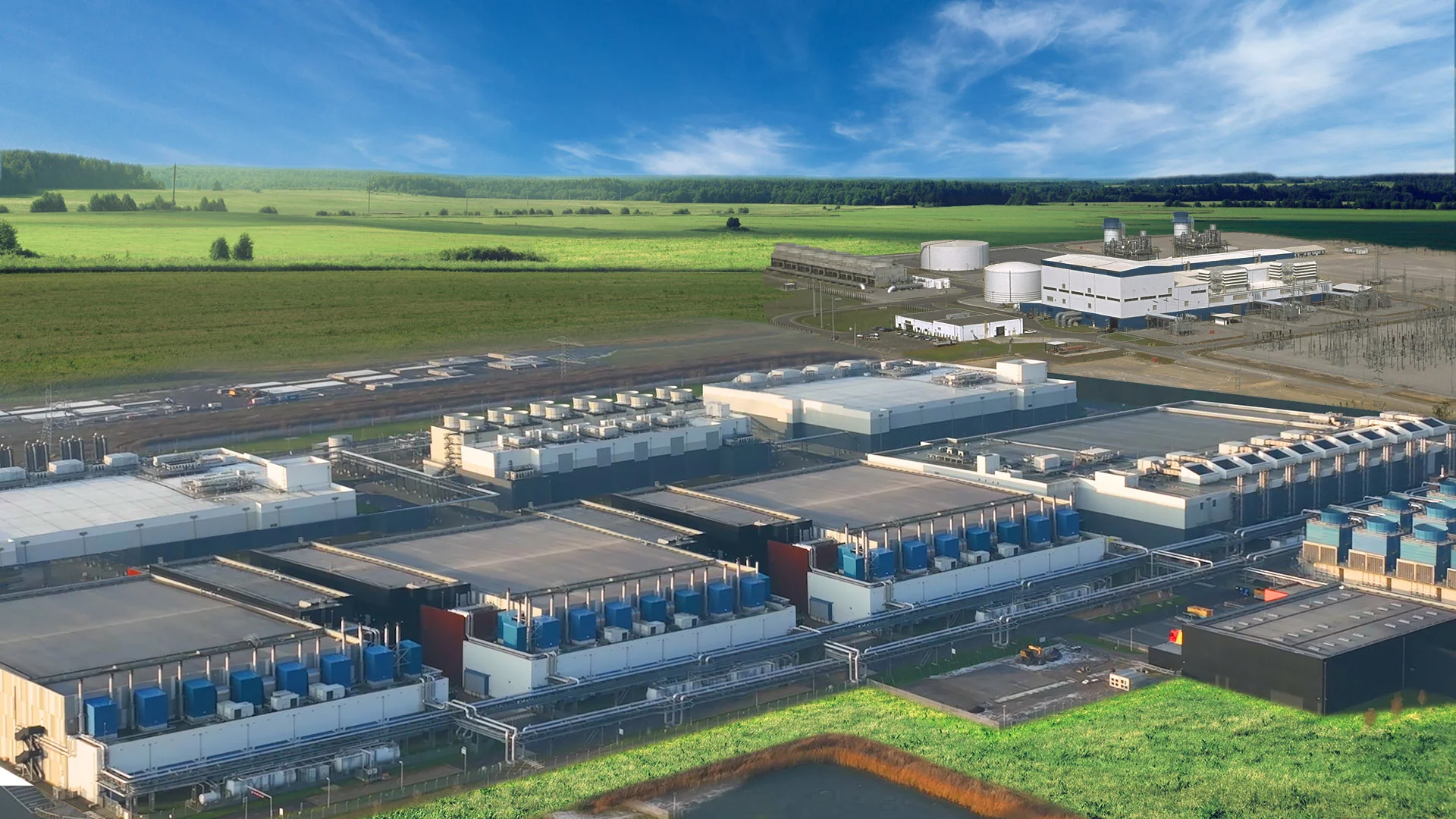
This is not a marketing rebrand. Neoclouds are physically different infrastructure, typically dense GPU clusters that are often liquid-cooled, sited next to power generation rather than population centers, with InfiniBand or RoCEv2 fabrics designed for tightly-coupled distributed training. Hyperscaler data centers were optimized for general-purpose workloads like millions of small VMs, web tier, and databases. Neoclouds were optimized for one thing, which is keeping thousands of GPUs synchronized at line rate.
The pricing gap is structural, not promotional
An H100 GPU-hour on a neocloud typically runs $2.43 to $2.63 on demand. The same GPU-hour on a hyperscaler runs $7.43 to $7.52. That is a 40 to 85% gap across major GPU models. Newer Blackwell B200 capacity sits around $4.99 to $6.02 per hour on neoclouds, versus over $14 per hour on hyperscalers.
The gap is not a temporary discount. Hyperscalers carry the cost of running a complete platform, including managed databases, identity, networking, dozens of regions, and hundreds of services. Neoclouds carry the cost of GPUs, power, cooling, and a thin software layer for provisioning, and they pass the structural savings through.
Where neoclouds win and where they don't
For training runs, fine-tuning, large-batch inference, and any workload where the GPU bill is the dominant line item, neoclouds win on cost per useful FLOP. For workloads tightly coupled to managed services, like a SaaS platform that needs a managed database, identity, object storage, and an LLM endpoint in the same VPC, hyperscalers still make sense.
The interesting middle ground is hybrid, where training and dedicated inference run on neocloud infrastructure while the product surface stays on a hyperscaler. The savings on the training side often fund the rest of the stack.
Why this matters for the next 18 months
The GPU supply situation has changed. From 2023 to early 2025, the bottleneck was raw silicon, and anyone with H100s could charge nearly any price. By 2026, the bottleneck has shifted to power. Grid interconnection queues stretch into 2028 in several US markets. The neoclouds that already secured power and built capacity are pulling ahead, while the ones still waiting for permits are not catching up.
For teams building or scaling AI products, this is the window where the right infrastructure choice compounds. Locking into hyperscaler pricing for a multi-year training roadmap means paying two or three times for the same compute. Building on a neocloud means the savings reinvest into more experiments, more iterations, and more model improvements.
Where Aolani Cloud fits
Aolani Cloud is built for this category. Our Bare Metal and GPU Cloud offerings give AI teams direct access to dedicated H100 and H200 capacity, with fabrics designed for distributed training and pricing that reflects the structural advantage of a GPU-first platform. There is no abstraction tax, no general-purpose overhead, and no waiting on hardware procurement. You get the compute your models need at the price it should actually cost.
See other articles
Scale AI Infrastructure from Chip to Cluster
Access GPU cloud and bare metal compute designed for teams building the next generation of AI in the region.